
Your brand is either being remembered or being ignored.
In a world where AI-powered search engines, large language models, and real humans all decide in seconds whether your brand deserves their attention — a generic logo and a vague "About Us" page are career-ending liabilities.
KJ ProWeb engineers brand strategies that command authority, earn trust, and gets your company cited by people and AI engines alike.
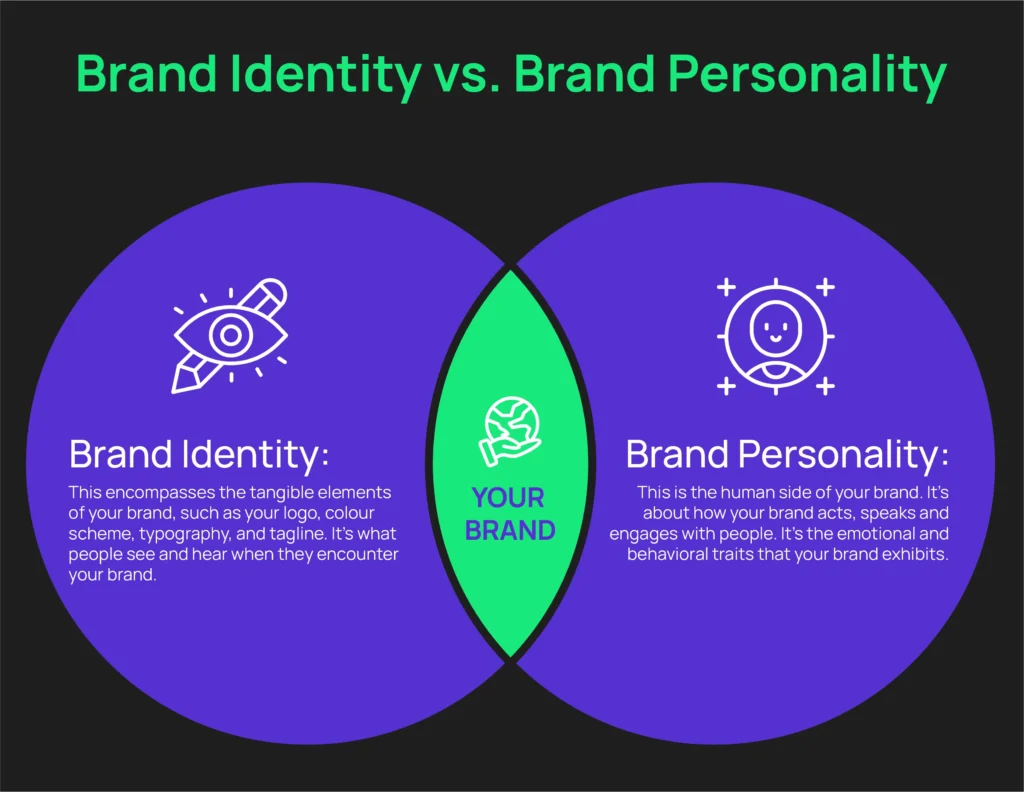
Brand Identity
Brand identity is what your company looks and sounds like (its face and outfit), while brand personality is how the company behaves and feels (its character and temperament).
Think of your business as a person. Your brand identity is the physical appearance—how they dress, their hairstyle, and their physical features.
Your brand personality is their actual disposition—whether they are witty, introverted, adventurous, or reliable.
Both are essential tools used by marketing teams to stand out and build customer trust.

Brand Voice
Brand voice is the personality the world sees, feels, and understands when you convey a message.
Just like you have your own unique way of texting, using slang, or talking to friends, a brand needs its own unique personality so people can recognize it instantly—whether they are reading an Instagram caption, a website, or an email.
The Operational Guardrails
When putting these principles into action, use a simple matrix to turn abstract personality traits into concrete writing rules:
Voice Pillar
Do This
Don’t Do That
Authoritative
Speak with confidence, use data, and get straight to the point.
Do not sound arrogant, dismissive, or use unnecessary corporate jargon.
Accessible
Use short sentences, simple language, and inclusive phrasing.
Do not oversimplify to the point of sounding patronizing or childish.
Witty
Use clever wordplay, sharp analogies, and situational humor.
Do not force puns, use inside jokes, or mock the audience.
Frequently Asked Questions
A logo is just a visual symbol used to identify your company. Your brand is the emotional space you occupy in a customer’s mind, built through your reputation, values, and customer experiences. Think of the logo as the face, while the brand is the entire personality.
How long does it take to deploy a corporate brand messaging strategy?
A complete corporate brand messaging framework requires two to four weeks to fully develop, validate, and execute. This timeframe encompasses comprehensive audience persona profiling, competitive marketplace insulation modeling, and linguistic voice parameter development.
The final asset operates as the single source of truth for all downstream copywriting, advertising asset creation, and UI/UX interface development.
What is the difference between a brand and a logo?
A logo is just a visual symbol used to identify your company. Your brand is the emotional space you occupy in a customer’s mind, built through your reputation, values, and customer experiences. Think of the logo as the face, while the brand is the entire personality. [1, 2, 3, 4, 5]
Why is having a formal brand strategy important?
A brand strategy acts as a clear roadmap for how the world perceives your business. It aligns your team, clarifies your messaging, and ensures your marketing efforts attract the right audience. Without it, your business risks looking disconnected and losing revenue to clearer competitors. [1, 2, 3, 4, 5]
How do we find our unique brand voice?
Start by analyzing your company’s core values, mission, and the specific needs of your target audience. Picture your brand as a real person and list traits that describe how they would speak—such as helpful, witty, or authoritative. Finally, look at your competitors and choose a distinct tone that sets you apart. [1, 2, 3, 4, 5]
What is a brand persona and why do I need one?
A brand persona is a detailed profile of your ideal customer based on data and real insights. It helps you understand their daily struggles, core desires, and what motivates them to buy. Creating this persona ensures your messaging speaks directly to real human needs rather than vague demographics.
How do we keep our brand consistent across different channels?
Develop a central brand style guide that outlines your visual assets, approved fonts, and voice guidelines. Train your entire team on these rules so everyone produces aligned content for social media, emails, and your website. Consistency builds strong customer recognition and deepens public trust over time. [1, 2, 3, 4, 5]
What should be included in a brand voice architecture?
A brand voice architecture includes your primary voice attributes, a detailed “do and don’t” language guide, and specific tone variations for different platforms. It also outlines your core brand messaging pillars and the specific vocabulary your team should use. This framework ensures your narrative remains strong across every single customer touchpoint. [1, 2, 3, 4, 5]
How often should a business re-evaluate its brand strategy?
Clear, consistent branding signals professionalism and reliability to the marketplace. When customers see a unified message everywhere, they feel safer making a purchase decision. Ultimately, strong branding builds an emotional connection that transforms one-time buyers into loyal brand advocates. [1, 2, 3, 4, 5]
How does strong branding directly impact customer trust?
You should review your brand strategy every two to three years, or whenever your business undergoes a major shift. Major triggers for a refresh include launching new products, targeting a different audience, or noticing a drop in customer engagement. Regular check-ins ensure your message stays relevant in a changing market. [1, 2, 3, 4, 5]
Lorem ipsum dolor sit amet, consectetur adipiscing elit. Ut elit tellus, luctus nec ullamcorper mattis, pulvinar dapibus leo.
Frequently Asked Questions
What is the difference between a brand and a logo? A logo is merely a visual graphic or trademark used to identify a business. A brand is the collective emotional perception, reputation, and experience people associate with your company. In short, a logo is just a symbol, while a brand is the entire identity behind it.
Why is having a brand strategy important? Without a strategy, your marketing efforts will be fragmented, confusing, and inconsistent. A strong strategy provides a clear roadmap that keeps your messaging, visuals, and company decisions aligned. This clarity helps you build long-term trust, command higher prices, and outshine your competitors.
How do I find my target audience? You find your audience by researching who has the specific problem your product or service solves best. Analyze demographics, behaviors, and motivations through surveys, customer interviews, and competitor data. Once identified, create ideal customer profiles to guide all of your branding decisions.
What is a brand voice and why does it matter? A brand voice is the distinct personality and style your business uses in all of its written and spoken communication. It matters because a consistent voice makes your business sound human, recognizable, and reliable. Whether your vibe is professional, playful, or authoritative, it helps you connect deeply with your ideal audience.
How long does it take to build a successful brand? Building a successful brand is a continuous, long-term journey that usually takes several months to years to gain significant traction. It requires consistent visibility, positive customer experiences, and repetitive messaging over time to cement a lasting reputation in the market. A brand is never truly "finished," as it must evolve alongside its audience.
When should a business consider a rebranding strategy? A business should rebrand when its current identity no longer reflects its values, offerings, or target market. This often happens during major company pivots, after merging with another business, or when trying to break free from a outdated image.
Rebranding helps realign public perception with your current business goals.
How do you measure the success of a brand strategy? Brand success is measured by tracking indicators like brand awareness, customer loyalty, and financial growth.
You can monitor this through website traffic, social media engagement, customer surveys, and repeat purchase rates. Ultimately, a successful strategy shows up as an increase in customer trust and long-term business value.
Quick Summary
Here are answers to some of the frequently asked questions about branding and brand strategy: